
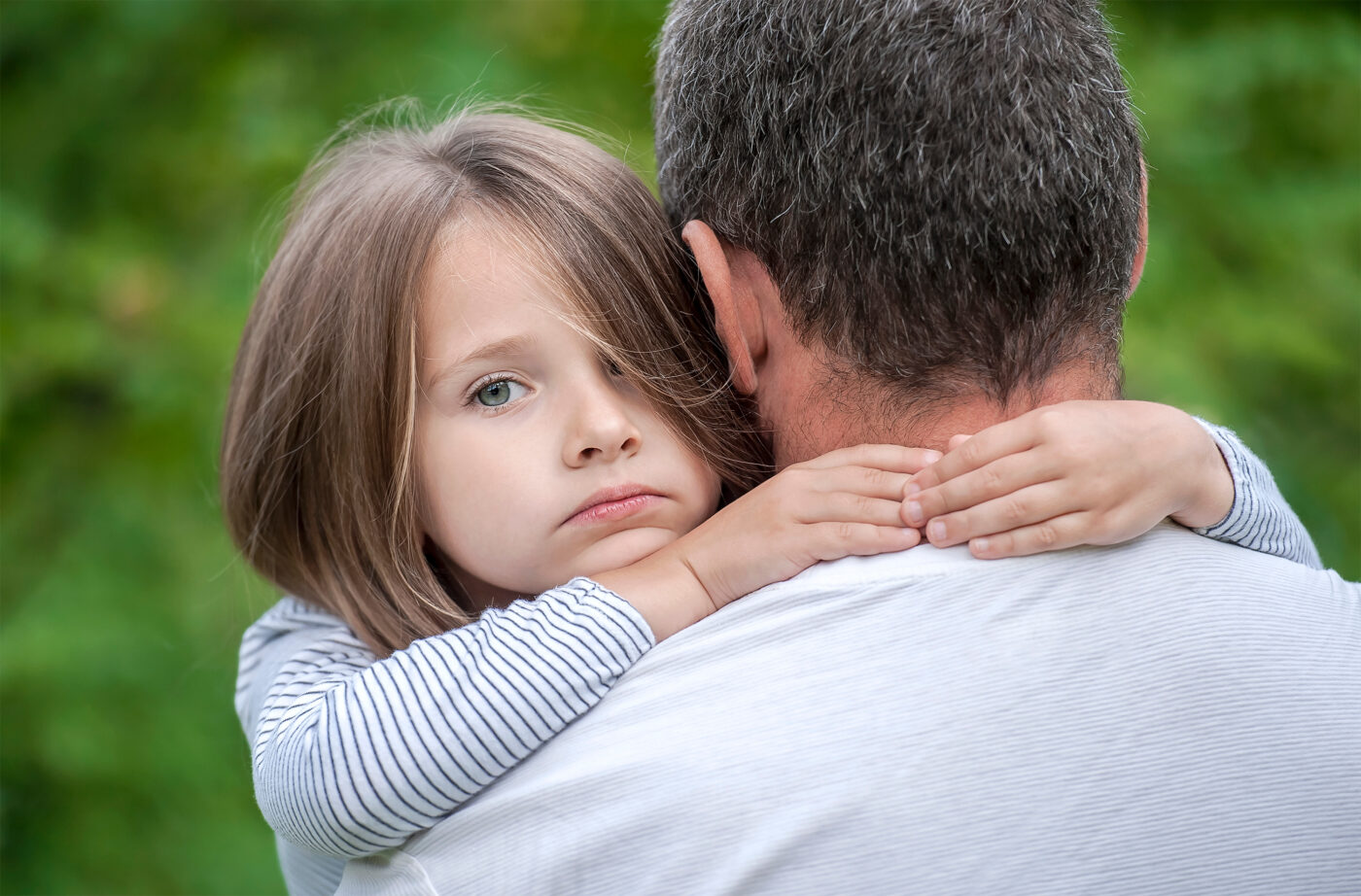

Have you heard the term “Velcro kid?” It’s exactly what it implies: A kid who is attached to his or her parent(s) like Velcro. To a degree, I think I was at least a part Velcro kid. I remember being 4 or 5 years old and the babysitter trying to cheer me up because I was crying over being separated from my parents. Going to school gave me anxiety, and I had a hard time going away to overnight camps.
I think the thing that helped me was my parents doing a good job of having empathy, but also encouraging independence. Do you have a Velcro kid? Is your child clingy to either you or your wife? Should it make you uneasy? Are you wondering how to handle it? We have answers to those questions and more. Here are those answers and how to handle a Velcro kid.
How does a child become a Velcro kid?
Having a Velcro kid is not the end of the world. Typically, it’s just a phase and can be triggered by feeling insecure or unstable, and these kids have a need for safety that they look for their parents to provide. It could be that the kid is experiencing developmental changes or big situational changes like a new school or a move. I think that was one of my causes. My family moved several times when I was young, and I would cling to what was familiar and safe. Kids can experience trauma, bullying, or something painful that may cause them to be clingy, again in search of safety. This was another one of mine. I had a bad experience with a babysitter at age three. It didn’t rise to the level of trauma or abuse, but I think it gave me anxiety about being separated from my parents.
What are the downsides to having a Velcro kid?
Parental Dependence
Velcro kids are dependent on their parents for everything. Parents don’t get a moment to themselves, which can lead to exhaustion and burnout.
Lack of Coping Skills
If it persists, it can lead to a lack of coping skills. The child becomes dependent on the parent(s) to handle their problems. This leads to an inability to deal with challenges and painful experiences.
Fear of Taking Risks
Avoiding risks keeps kids from having new experiences, managing their anxiety, and developing perseverance.
Lack of Boundaries
Kids need boundaries. That includes the parent-child relationship. Boundaries make kids feel more secure and help them learn social and behavioral norms.
Enmeshment
Velcro kids can lead to enmeshment with a parent if clinginess becomes an ongoing pattern. Enmeshment is over-involvement in each other’s lives and a lack of healthy boundaries. For example, the child becomes more of a peer and best friend to the parent rather than a parent-child relationship.
Stress on Your Marriage
The demands a Velcro kid places on parents can cause significant stress in a marriage. Husbands and wives need time together, and when they don’t get it, they can become disconnected.
How do you handle Velcro kids?
Kids need to learn that they are OK apart from their parents. Being bonded to you or your wife is a good thing. However, it’s also good for them if you introduce a little independence. Start small. Tell your child you’re going to leave the room for one minute. Don’t sneak out; tell them you’re leaving and that you’ll be back. Sneaking out undermines their trust and doesn’t solve the problem. This is something you need to work on with them intentionally.
Introduce room time. Tell them they will have five minutes in their room without you (or less if their clinginess is severe). They may throw a fit the first time (or maybe even the first 10 times). Stick with it and gradually increase the amount of time. Also, make room time a consistent part of the schedule. Velcro kids do better when they know what to expect and when their schedule is consistent and predictable.
Don’t expect instant change. It will take some time, but know that Velcro kids typically aren’t clingy forever. It tends to be a phase that eventually ends, but doing some of these things helps kids take healthy steps toward age-appropriate self-reliance and builds their self-confidence.
Are you or your wife a Velcro parent?
A Velcro parent is someone who stays overwhelmingly close to their child, both emotionally and physically. In this case, the parent is the initiator in being inseparable. Typically, the parent has an unmet need or fear that motivates them to stay unhealthily attached to their child. Perhaps they were abandoned as a kid or are fearful of pain and loss.
Bottom line, this is a problem. Velcro parents will often tout the closeness they have with their kids, and that’s great. But kids need the ability to stand on their own rather than constantly being dependent on their parents. Otherwise, it can deeply affect a child’s self-confidence, perseverance, and their belief in their ability to handle challenges. That adds to the ongoing anxiety problem plaguing kids today.
Proverbs 22:6 says, “Start children off on the way they should go, and even when they are old they will not turn from it.” It doesn’t say attach yourself to your kid forever so you can direct them through life. The verse compels us to guide them for a while and then let them go. The best way to do that is to guide kids and then back off so they can learn to navigate, problem-solve, and overcome challenges on their own. If we cling to them, at best, they’ll struggle to stand alone. At worst, they never will.
Sound off: Do you have Velcro kids? How have you dealt with them?
If you want to raise resilient kids who aren’t afraid of a challenge, join us on the All Pro Dad Podcast as we dive into why the best growth happens just outside their comfort zone




Huddle up with your kids and ask, “What’s been your biggest accomplishment without my help?”